

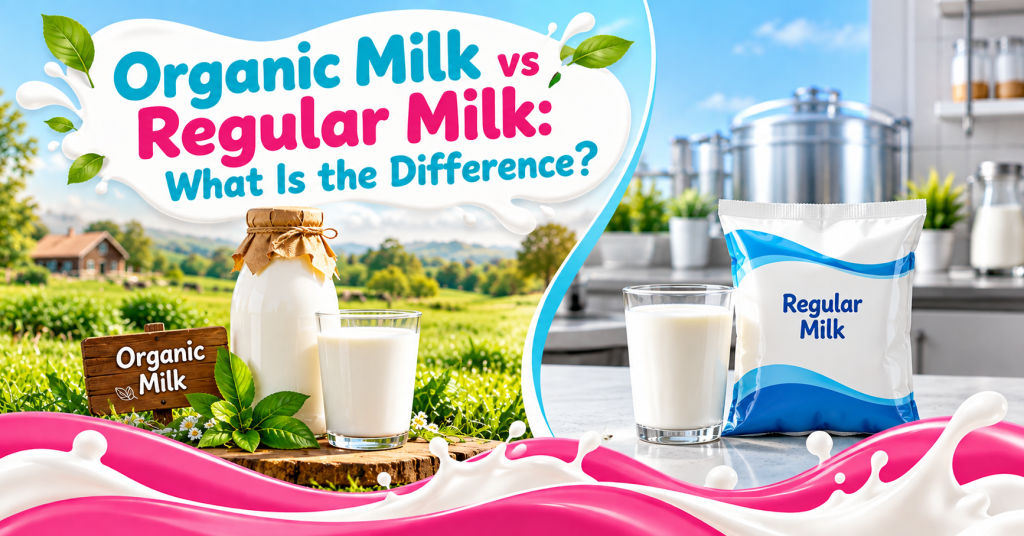
A shopper in a Chennai supermarket picks up two nearly identical cartons, one labelled “organic” and priced almost double the other, and pauses to figure out whether that premium is justified or just clever packaging. It’s a fair question, and one that doesn’t have an obvious answer without understanding what “organic” actually requires versus what regular, conventional milk involves at the farming level.
This piece breaks down that difference clearly, covering farming practices, nutrition, taste, and price, drawing on how sourcing cow milk in Chennai actually works behind the label.
What “Organic” Actually Requires
Organic milk isn’t simply a marketing label, it reflects specific, certified farming standards that regular milk doesn’t have to meet. To earn an organic certification, milk must generally come from cattle that satisfy a number of criteria:
- Fed organic feed grown without synthetic pesticides or chemical fertilizers
- Raised without routine antibiotics or synthetic growth hormones
- Given regular access to pasture and outdoor grazing as opposed to constant indoor confinement
- Managed under farming practices that are independently audited and certified to organic standards
These requirements influence how the farm operates on a day to day basis, not just what is printed on the carton.
What Regular Milk Involves
Regular, conventional milk still meets necessary safety and quality standards, but the farming practices behind it are not subject to the same certification requirements. A few things differ at the farm level:
- Feed often includes conventional grains grown with standard fertilisers and pesticides
- Antibiotics can be used when medically necessary, without the same restrictions organic certification imposes
- Outdoor grazing access varies considerably from farm to farm rather than being a requirement
- No independent organic audit or certification applies to the farming process
This doesn’t make regular milk unsafe, it simply means the farming standards behind it are less specifically defined than organic certification requires.
Organic vs Regular Milk
The differences are easiest to see laid out directly against each other, since the gap isn’t always obvious from packaging alone.
|
Factor |
Organic Milk |
Regular Milk |
|
Feed |
Certified organic, no synthetic pesticides or fertilisers |
Conventional feed, may include treated crops |
|
Antibiotics and hormones |
Not used routinely, restricted under certification |
Permitted when medically necessary |
|
Grazing access |
Required regular outdoor access |
Varies by farm, not standardised |
|
Certification |
Independently audited and certified |
No organic certification required |
|
Price |
Higher, reflecting farming and certification costs |
Generally lower |
|
Nutritional profile |
Comparable, with some studies showing marginally higher omega-3 content |
Standard nutritional profile for dairy milk |
These differences rarely show up just by looking at the milk itself, which is exactly why understanding what sits behind each label matters more than the price tag alone.
Do the Nutritional Differences Actually Matter
This is where the comparison gets more nuanced than marketing often suggests. Several studies have found organic milk, particularly from grass-fed cows, contains slightly higher levels of omega-3 fatty acids and conjugated linoleic acid compared to conventional milk. The difference is measurable, but tends to be modest rather than dramatic. Core nutrients like calcium, protein and vitamin D are broadly similar between the two, meaning the primary case for organic milk rests more on farming practices and reduced chemical exposure than a dramatically different nutrition label.
Why Organic Milk Costs More
That difference is generally from a few things:
- Lower yields per cow, as the process doesn’t include growth hormones and some of the efficiencies of feed
- Ongoing certification audits and compliance costs built into the price
- Higher cost of organic feed than conventional grain
- Smaller farming operations that do n’t get the same economies of scale
That price difference is reflective of a much more resource intensive production process, and not just a label-based markup.
Taste and Sourcing Transparency
Many people report a noticeable taste difference favouring organic milk, often attributed to pasture-based diets and less intensive farming. Sourcing transparency also tends to differ, organic and small-scale local farms are often easier to trace back to a specific origin, while conventional milk is more frequently pooled from multiple large sources before reaching a store shelf. For households that value knowing exactly where their milk comes from, this traceability often matters as much as the certification itself.
What to Check Before Paying the Organic Premium
Not every carton labelled “organic” reflects the same level of rigour behind it. A few things worth checking before assuming the premium is justified:
- Whether the certification is from a recognised, independently audited body
- Whether the farm details are actually disclosed, rather than just a generic label
- Whether the supply chain is short enough that freshness isn’t compromised in transit
- Whether the price reflects real farming practices rather than packaging alone
Making the Right Choice for Your Household
Regular milk meets safety standards and offers solid nutrition at a lower price point, which works well for households prioritising cost and convenience. Organic milk suits households specifically looking to reduce exposure to synthetic inputs, support pasture-based farming, or who notice a real taste and digestibility difference worth the added cost.
GhoMoo sources cow milk from its own farm and a network of trained local farmers, testing for purity and moving milk through a dedicated cold-chain system that keeps the gap between milking and delivery as short as possible. That short supply chain matters regardless of whether a household chooses organic or regular milk, since freshness and handling affect quality just as much as farming method does.
For households specifically prioritising certified, pasture-based farming practices, organic milk Chennai options sourced through a transparent, traceable supply chain make it considerably easier to verify that the premium being paid actually reflects the farming standards behind it, rather than relying on packaging claims alone. Understanding what organic certification actually requires, and what it doesn’t dramatically change, turns that decision into a choice based on what a household actually values, cost, farming practices, or both.