





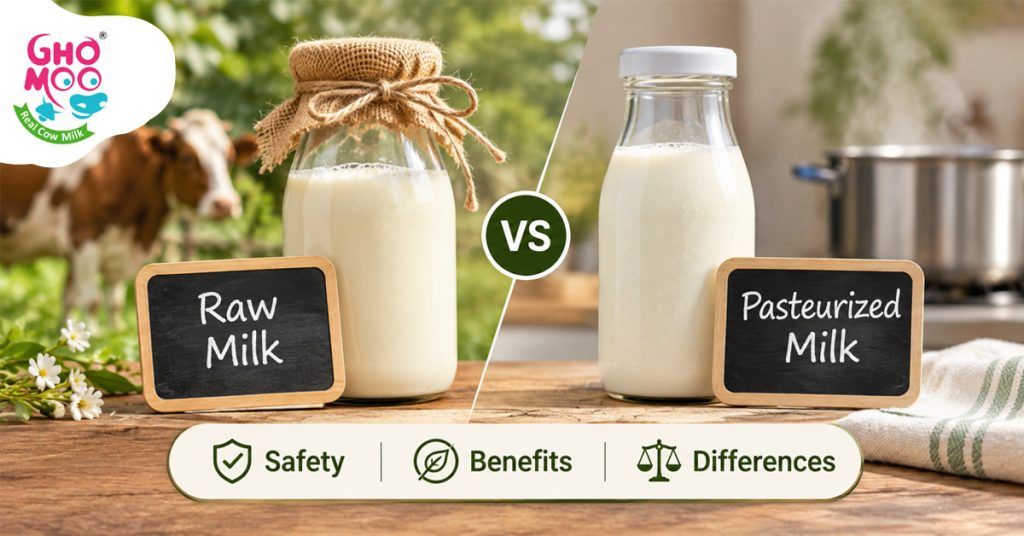
A grandmother insists the milk from the farm tastes the way milk should, while her daughter reads a carton that says “pasteurised” and feels safer. Both are partly right, and the argument rarely gets past opinion. Meanwhile, the child at the table just wants a glass that is safe, fresh and easy to digest.
This guide sets out what raw and pasteurized milk are, how pasteurization works, what it changes and does not change, the safety concerns, a side-by-side comparison, how to handle milk at home and how to choose. If you are comparing cow milk in Chennai, it gives you the facts to ask better questions.
What Raw Milk Is
Raw milk is milk straight from the cow, chilled but not heat-treated. Many households in India buy loose milk from a local vendor or farm and boil it at home. That boiling step is the only safety treatment most of it gets.
Raw milk can taste fuller and slightly sweeter, and it keeps natural enzymes and a mix of bacteria. Some of those bacteria are harmless. Others can cause illness, which is why handling matters so much.
Quality varies widely with the source. Milk from a clean, well-managed farm, collected in sterilised containers and chilled quickly, is very different from milk that sits in warm cans for hours. Since you usually cannot see the milking conditions, asking the seller about hygiene, cooling and transport becomes an important part of buying raw milk.
What Pasteurization Does
Pasteurization heats milk to a set temperature for a set time, then cools it quickly. The aim is to destroy harmful bacteria while changing the milk as little as possible.
Common methods include holding milk at about 63 degrees Celsius for 30 minutes, or heating to about 72 degrees for 15 seconds, then chilling. Ultra-high temperature treatment goes further and gives a long shelf life in sealed packs. The process targets organisms such as Salmonella, E. coli, Listeria and Campylobacter, which can be present in milk even from healthy-looking animals.
Pasteurization is not the same as sterilisation. It reduces harmful bacteria to safe levels but does not remove every microorganism, which is why pasteurized milk still needs refrigeration and has a use-by date. Ultra-high temperature milk goes further, which explains why sealed packs can sit unopened on a shelf for months.
Safety: The Real Difference
This is where the two diverge most. Raw milk can carry disease-causing bacteria from the udder, the milker’s hands, equipment or the environment. Health agencies, including the World Health Organization, advise treating milk to make it safe, and the risk is higher for children, older adults, pregnant women and people with weak immunity.
Pasteurization removes most of that risk before the milk reaches you. Boiling raw milk at home also kills harmful bacteria, but only if the milk is brought to a full boil and handled cleanly afterwards. Unboiled raw milk is an unsafe case.
Symptoms of milk-borne illness include stomach pain, vomiting, fever and diarrhoea, and they can appear within a day or a few days. Most healthy adults recover, but infants, older adults and pregnant women face higher risk of serious complications. Because a contaminated glass of milk can look, smell and taste normal, safety cannot be judged by senses alone, and treatment is the dependable protection.
What Pasteurization Changes and What It Does Not
Many claims about lost nutrition are overstated. Protein, calcium, fat and most minerals stay essentially the same. Some heat-sensitive vitamins, such as vitamin C and certain B vitamins, drop slightly, though milk is not a main source of vitamin C anyway. Enzymes are reduced, and flavour can shift a little, especially with higher heat.
Claims that raw milk cures allergies or digests better than pasteurized milk lack strong evidence. People with lactose intolerance react to the lactose in both.
Milk’s main nutritional strengths are protein, calcium, phosphorus and vitamin B12, and these survive pasteurization well. Taste differences people notice often come from freshness, the cow’s feed and fat content, rather than from the heat treatment itself. A fresh, well-handled pasteurized milk can taste rich, and stale raw milk can taste flat.
Raw vs Pasteurized Milk: Key Differences at a Glance
|
Feature |
Raw milk |
Pasteurized milk |
|
Heat treatment |
None, boiled at home before use |
Controlled heating and rapid cooling |
|
Safety on arrival |
Higher risk of harmful bacteria |
Much lower risk |
|
Taste |
Fuller, farm-like |
Slightly milder, depends on method |
|
Nutrition |
Same core nutrients |
Nearly identical, small loss of some heat-sensitive vitamins |
|
Shelf life |
Short, a day or two cold |
Longer, depends on method and packaging |
|
Handling needed |
Strict boiling and clean storage |
Keep chilled and use by date |
|
Consistency |
Varies with farm and season |
More uniform from batch to batch |
|
Suitable for children and elders |
Only after proper boiling |
Generally safer choice |
Handling Either Type at Home
For raw milk, bring it to a rolling boil, simmer briefly, cool it and refrigerate in a clean, covered container. Use it within a day or two, and avoid reheating repeatedly.
For pasteurized milk, check the date, keep it cold and finish it within the stated time after opening. Some families still boil it, which is not necessary for properly pasteurized, sealed milk, though it is harmless if the pack was left warm.
In Chennai’s heat, never leave either type out for hours. Warm milk spoils quickly and can become unsafe before the smell changes.
Use clean, dry containers and wash them with hot water each day. Do not top up yesterday’s milk with today’s, since older milk can spoil the fresh batch. Store milk in the main body of the refrigerator and not the door, where temperatures change each time it opens. Keep it covered, because milk absorbs smells from nearby foods.
How to Choose Between Raw and Pasteurized Milk for Your Family
Ask where the milk comes from, how soon after milking it is chilled, how it is transported and whether it is heat-treated. Look for clear dates, clean packaging and a supplier who answers questions openly. If you buy raw, only do so from a source you trust, and always boil it. If you have infants, elderly relatives or anyone with a weak immune system at home, pasteurized milk is the safer default.
GhoMoo works with its own farm and a network of trained local farmers, with attention to feed quality, herd health and short delivery routes. Its focus is on keeping milk fresh and consistent across seasons. Its team is open about how the milk is collected, chilled and delivered, which helps families make an informed choice for children and older relatives. Consistent richness and freshness through the year, not just on the first delivery, remain the main goal.
Safe, Fresh and Trustworthy: What Should Land in Your Glass
Raw milk offers flavour and a farm connection, but it carries a safety burden that falls on you. Pasteurized milk offers consistency and lower risk with nutrition that is very close to raw. Whichever you choose, freshness, clean handling and a trusted source matter most. So if you are a family looking for a reliable daily supply, then a good place to start is to look for fresh milk in Chennai from a supplier that explains how it does things.